The standards behind the Overleveling network
Independent brands, one operating standard. What every property in the network is expected to do, and what each is free to decide for itself.
- Overleveling
- 3 min read
- Network
Operating a network only makes sense if the properties in it get something they could not get alone. Otherwise it is just common ownership, which does nothing for the reader.
What our brands share is a floor. Each is free to decide its own voice, scope, community and product roadmap. None is free to decide whether sources matter.
What every property is expected to do
- Verify before publishing. Where a claim can be checked in the game, in official communication, or in data, it is checked — and where it cannot be, the page says so instead of implying certainty.
- Attribute sources. Readers should be able to see where something came from and go look for themselves.
- Correct visibly. A route to report an error, a fix that reaches every place the error appeared, and a correction the reader can actually see.
- Show freshness. What the information covers and when it was last updated, especially for anything derived from a live game.
- Be accountable for AI-assisted work. Tools may assist with research and drafting; a person is responsible for what publishes, and that responsibility does not transfer to a model.
- Disclose commercial relationships. Affiliate links, sponsorships and paid placements are labelled clearly and never disguised as editorial judgement.
- Keep editorial independence. Commercial work does not decide what gets recommended, and no advertiser gets a veto over coverage.
- Stay usable. Keyboard operation, sufficient contrast, meaningful structure and reduced-motion support are requirements, not enhancements.
A shared standard is only real if it is cheaper to follow than to ignore. That is an engineering and tooling problem as much as an editorial one.
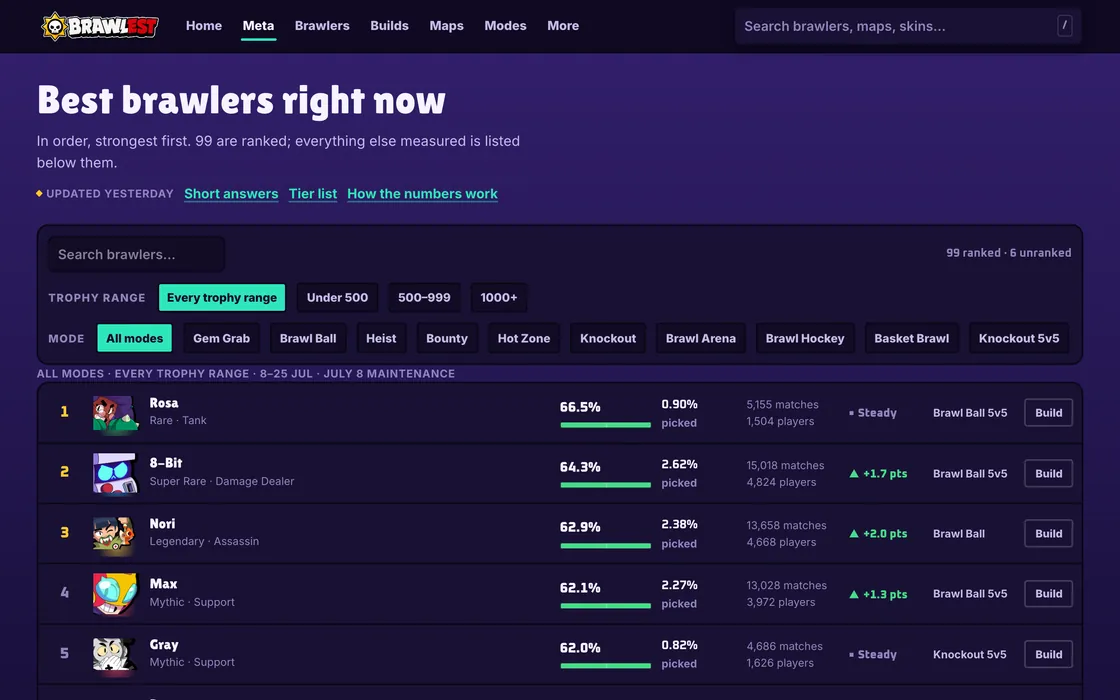
What each brand decides for itself
Voice is not centralised. A shooter audience and a Pokémon audience do not want to be spoken to identically, and forcing one house style onto both would make each worse. Scope is not centralised either — the decision about which parts of a game deserve deep coverage belongs to the people who know that game and its community.
The same applies to product. A reference platform, a live analytics tool and a publication have genuinely different shapes. Trying to standardise their interfaces would produce something that fits none of them.
Independence from the games we cover
Every property in the network is an independent resource. None is affiliated with, endorsed by, or sponsored by the games or publishers it covers, and none should ever be presented in a way that suggests otherwise. Game names and trademarks belong to their respective owners, and are used for factual identification and commentary.
This matters commercially as well as legally. A reader who cannot tell whether a site works for them or for the publisher cannot use its recommendations, which makes the recommendations worthless to everyone including the publisher.
Why this is written down
Standards that live only in people’s heads drift, and they drift fastest under deadline pressure. Writing them down does not guarantee they are followed, but it makes the gap visible when they are not — to readers, to partners, and to us.
The fuller version is published as our editorial standards, and it is intended to be held to.