
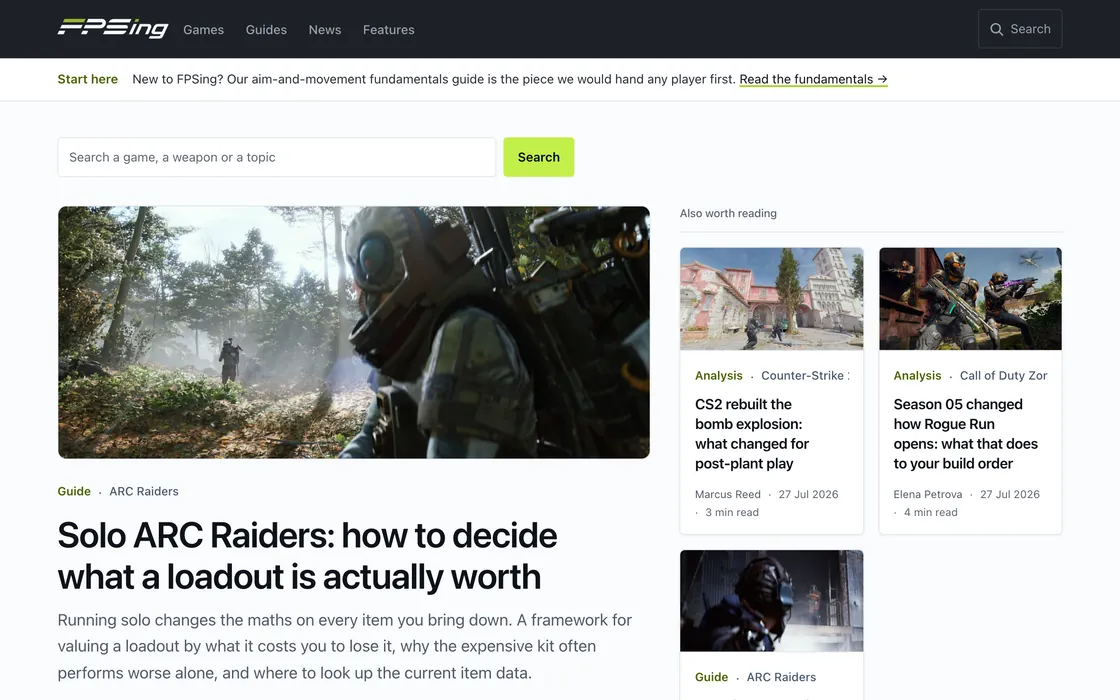
FPSing
Practical guides, updates, loadouts, and analysis for first-person shooters.
Built for Shooter players deciding what to run, where to go, and what a patch just changed.
Each one is built for a single game or platform and the community around it. What they share is everything underneath: the data pipelines, the editorial standards, and the engineering that keeps a database honest when a patch invalidates half of it overnight.
2 publishing destinations and 7 data, reference and tool platforms. Every one of them is serving a public product rather than a landing page.
09
Structural facts about the portfolio, checked against every live property. No audience, traffic or revenue figure appears anywhere on this site.
9 live products, each built for one game or platform and the community around it. None of these is a mockup.
Practical guides, updates, loadouts, and analysis for first-person shooters.
Built for Shooter players deciding what to run, where to go, and what a patch just changed.

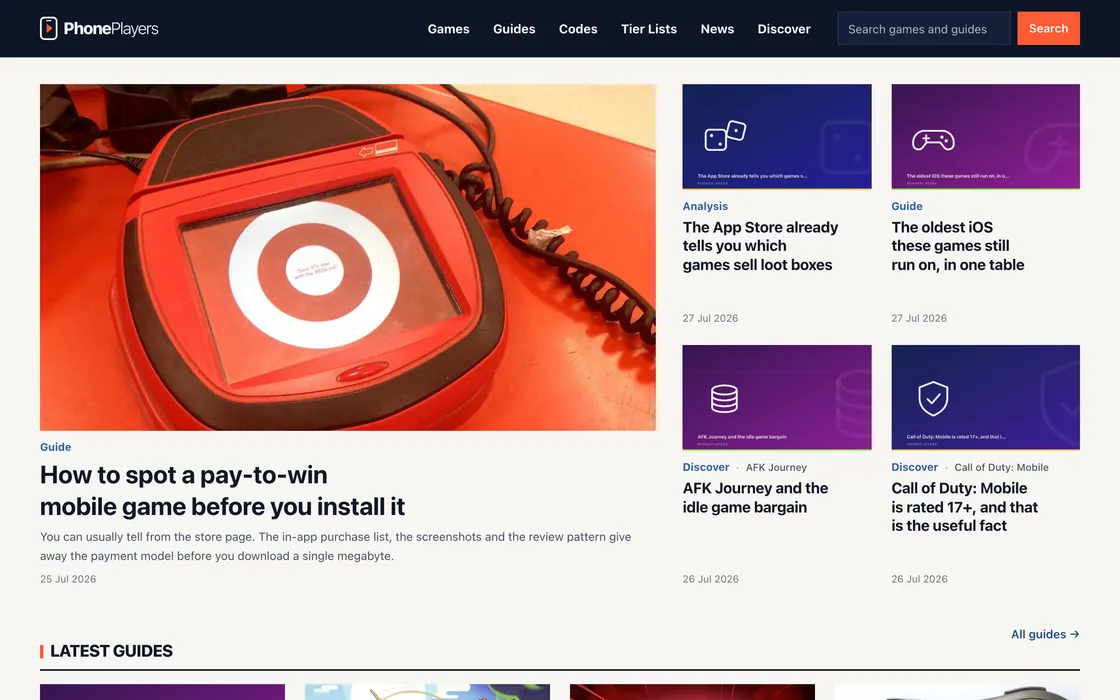
Guides, codes, news, and recommendations for mobile players.
Built for Mobile players choosing what to install next and getting more out of what they already play.
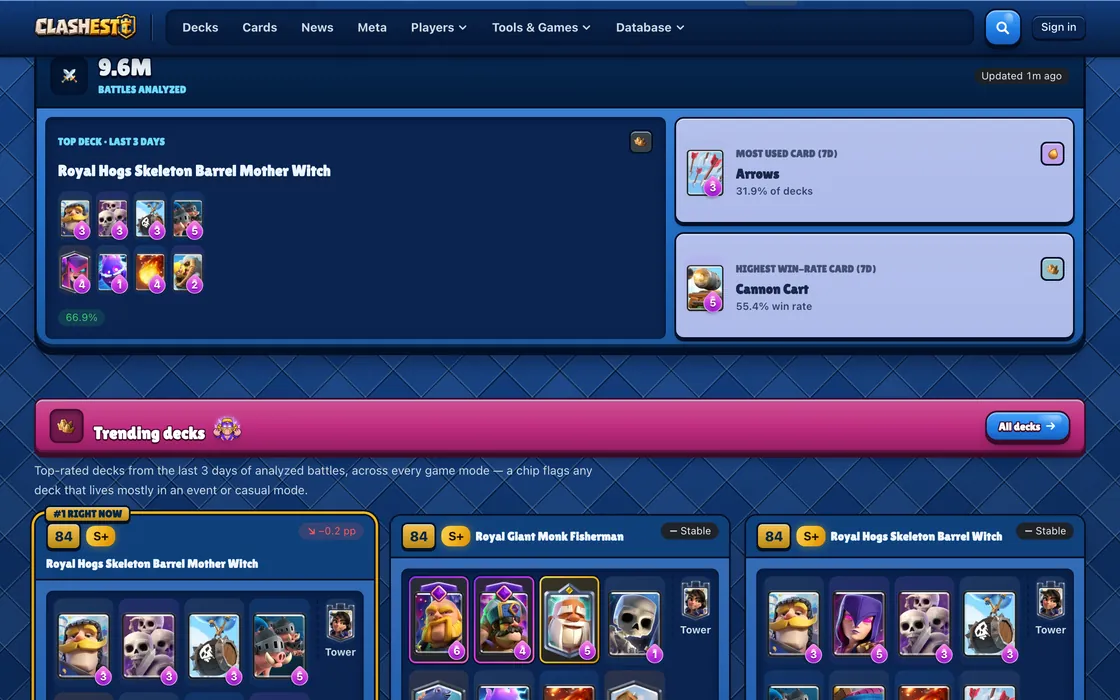
Clash Royale decks, live meta analysis, player statistics, and competitive tools.
Built for Clash Royale players picking a deck and tracking what the meta is doing.

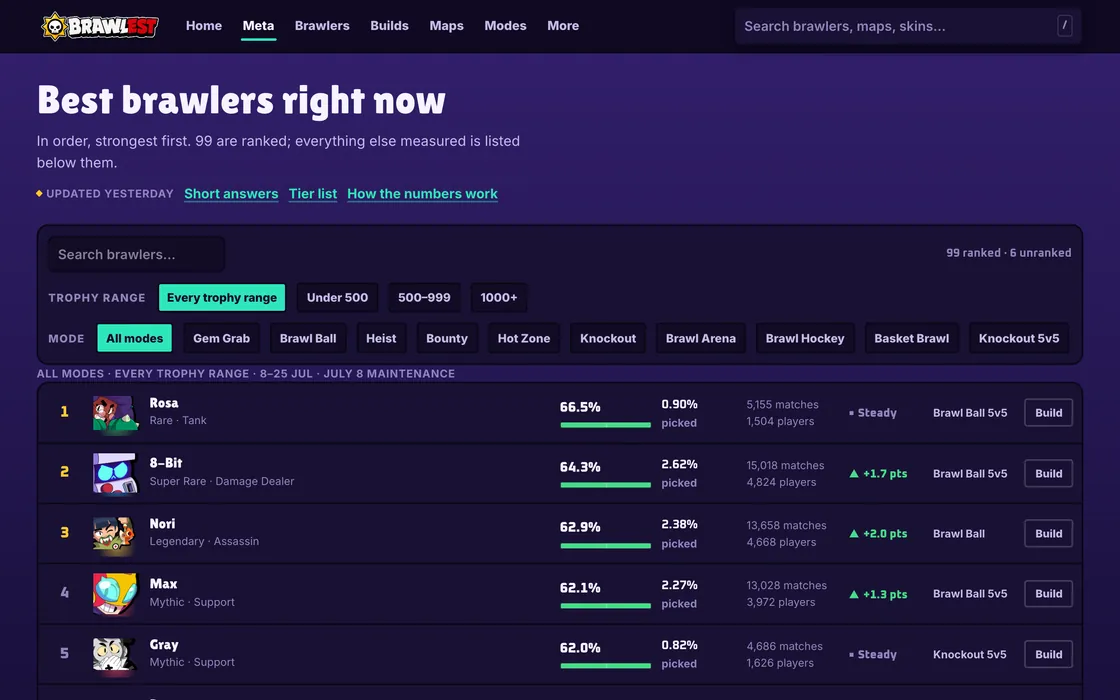
Brawl Stars meta, builds, maps, rotations, and brawler performance.
Built for Brawl Stars players choosing a brawler for the mode and rotation in front of them.
Call of Duty Zombies maps, quests, Easter eggs, weapons, story, and tools.
Built for Zombies players mid-round who need the next step, and readers following the story across twenty years of maps.

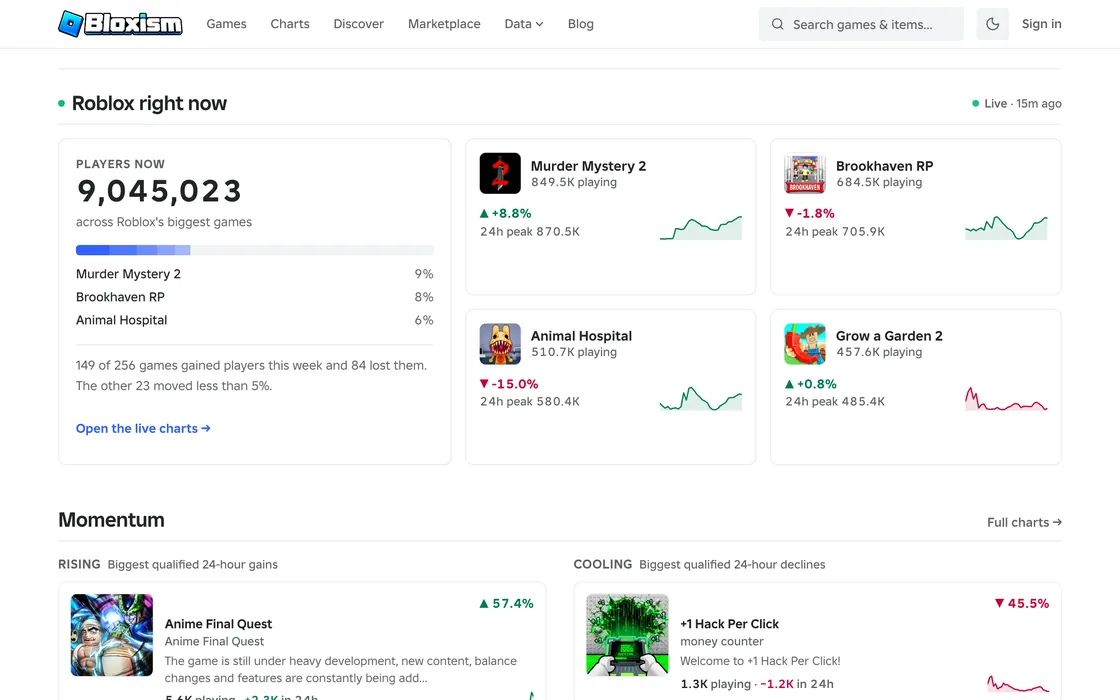
Roblox game analytics, codes, item databases, values, and calculators.
Built for Roblox players deciding what to play next, and traders who need an item to be worth what the page says.

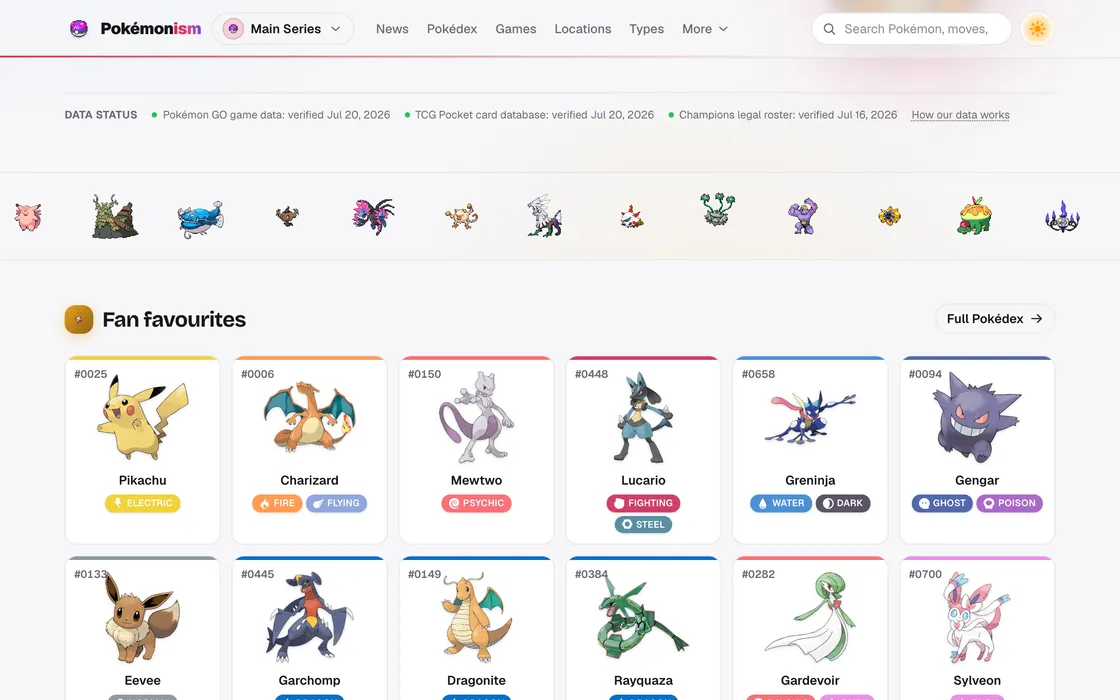
A cross-game Pokémon database for creatures, moves, locations, events, and team tools.
Built for Players moving between the main series, GO and TCG Pocket who want one place that knows about all of them.
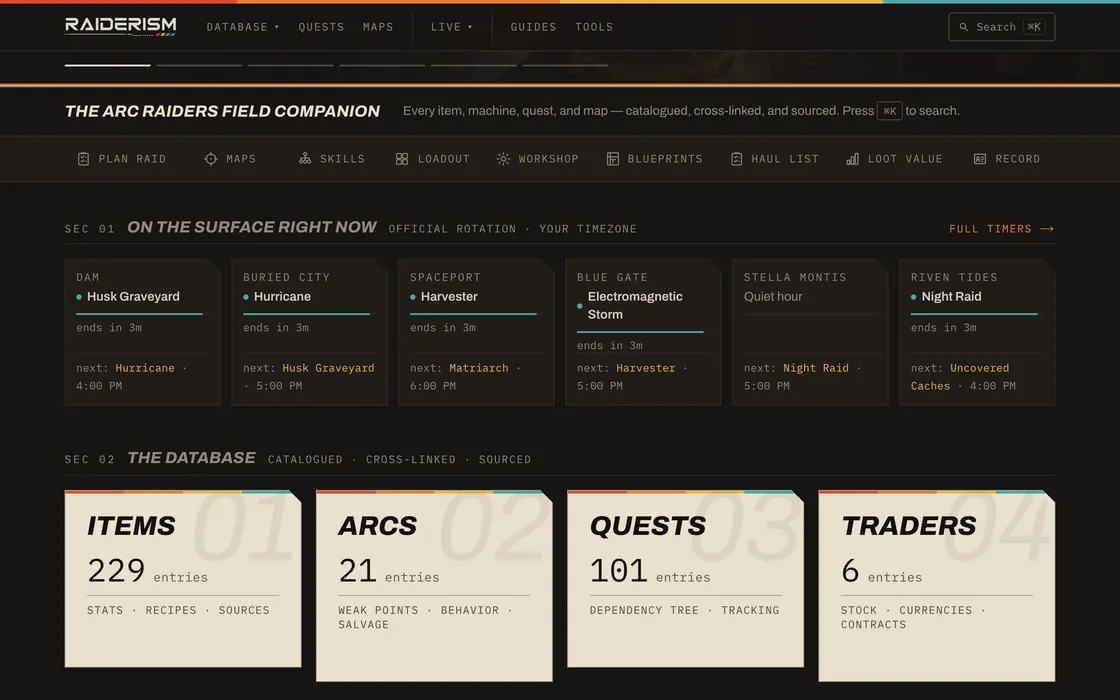
ARC Raiders databases, interactive maps, quests, loadouts, events, and planning tools.
Built for ARC Raiders players planning a run before they drop and pricing the haul after it.
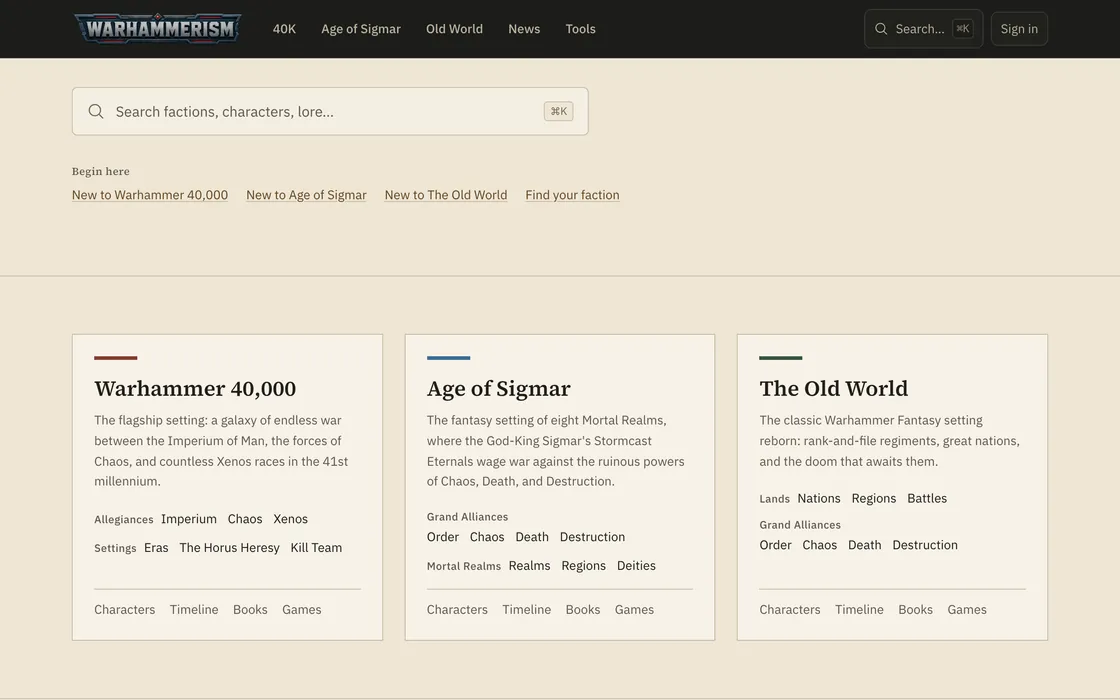
Warhammer references, faction data, reading guides, and hobby tools.
Built for Warhammer readers and players finding a way into a setting, and returning ones checking a faction or a reading order.
Publishing catches a player at the moment they ask something. Databases and tools are what they come back to when the game changes underneath the answer. Neither half is worth as much alone.
Timely guides, codes, updates, recommendations, and explanations that help players find the right answer quickly.
See the publishing brandsLiving databases, live meta analysis, interactive maps, builders, calculators, and reference systems players keep coming back to.
See the data, reference & tools brandsWhich code still works. What an item trades for. Where the power is on a map nobody has finished yet. Urgent, specific, and finished the moment it is answered.
A guide answers the question now and records how it knows — which is what separates an answer a reader can act on from one they have to gamble on.
Codes desk
Every code list records when it was last worked through and what that check found, rather than implying freshness.
Every patch, every season, every new map. Answered one article at a time, that is a series. Looked at properly, it is a schema — and this is the point where publishing stops being the right product.
Items, quests, maps, moves and factions modelled as records with relationships between them, each carrying its source and the game version it was read from.
Sourced, versioned database
Items, machines, quests and traders cross-linked, each carrying its source and the game version it was read from.
A tool a player opens again next week, because the number moved and the page moved with it. That is the half of the network that compounds.
Deck rankings from live battles
Rankings recomputed from analysed battles, with the analysis window and the last update stated on the panel.
This is the move that makes the network worth operating as one company rather than nine. It is easiest to see on the property where it has had the longest to compound.
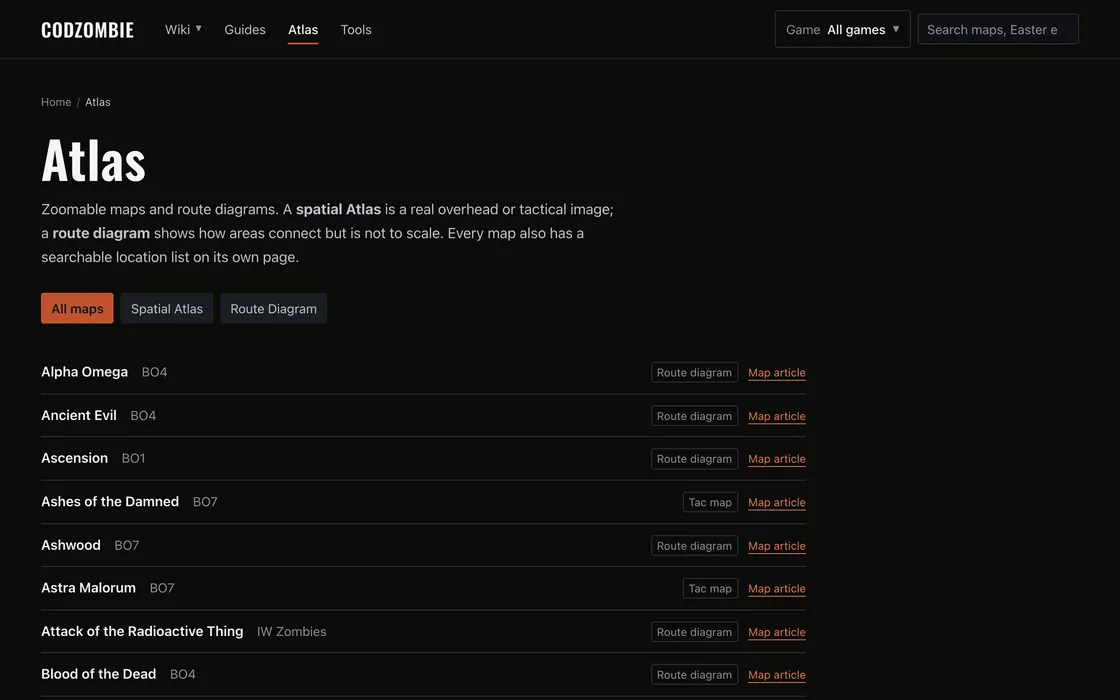
CODZombie — the Atlas indexes every Zombies map with a spatial map or a route diagram, each linking to its own searchable location list.
Maps, characters and storylines linked across the Treyarch line from World at War onward.
The same shape runs under Raiderism’s quest tree, Pokémonism’s cross-game Pokédex and Clashest’s deck rankings. Different games, one way of working.
Every new map brings the same questions in the same order: where the power is, how to reach Pack-a-Punch, what the quest steps are, which wonder weapon is worth the detour.
Answered one article at a time, that is a series with a hundred entries. Read across all of them, the questions are the same fields every time — a map, a location, a step, an item, an order.
Maps, locations, quests, weapons, perks, enemies and characters modelled as records with relationships between them, rather than described in prose and hoped over.
Every map indexed with a spatial map or a route diagram, plus a searchable location list on each map page.
Main quests broken into ordered steps rather than described in prose.
A new map is a new row rather than a new project. A changed quest step is one record, and every page referencing it is correct the moment it is saved.
Across 9 properties, or against the one that fits.